Tuesday, November 30, 2010

Fred Canonge: Pehlwan of Benares

Photo © Fred Canonge-All Rights Reserved
Pehlwani (also known as Kushti) is a traditional style of wrestling popular in the sub-continent of India, Pakistan and Bangladesh. The wrestler is known as pahlawan which, interestingly for those who are etymologists, is the colloquial Arabic word meaning "clown". I wouldn't tell this to these wrestlers, as they would be offended and I'd be on the mat in less than a second.

Based in Paris, Fred Canonge is a French freelance photographer who has extensively travelled in India for the last ten years, and is constantly exploring all the nuances and the diversity of Indian society. His website is replete with galleries of India, including some of images made in Kathputli and Varanasi, but the gallery which I liked the most has his work on the pehlawan.

Varanasi has a number of traditional wrestling training gyms (known as akhara), and one can spot them working with rudimentary weights near Tulsi ghat. The wrestlers' diets consist of milk, almonds, ghee, eggs and chapattis, but have a difficult time making ends meet. Some of them find work as bodyguards to those who need protection or as "enforcers" during political elections.

Fred Canonge: Pehlwan of Benares

Photo © Fred Canonge-All Rights Reserved
Pehlwani (also known as Kushti) is a traditional style of wrestling popular in the sub-continent of India, Pakistan and Bangladesh. The wrestler is known as pahlawan which, interestingly for those who are etymologists, is the colloquial Arabic word meaning "clown". I wouldn't tell this to these wrestlers, as they would be offended and I'd be on the mat in less than a second.

Based in Paris, Fred Canonge is a French freelance photographer who has extensively travelled in India for the last ten years, and is constantly exploring all the nuances and the diversity of Indian society. His website is replete with galleries of India, including some of images made in Kathputli and Varanasi, but the gallery which I liked the most has his work on the pehlawan.

Varanasi has a number of traditional wrestling training gyms (known as akhara), and one can spot them working with rudimentary weights near Tulsi ghat. The wrestlers' diets consist of milk, almonds, ghee, eggs and chapattis, but have a difficult time making ends meet. Some of them find work as bodyguards to those who need protection or as "enforcers" during political elections.

Monday, November 29, 2010

VII: Franco Pagetti: Afghanistan's Agony


The exciting VII The Magazine features Afghanistan' Agony, the multimedia work of Franco Pagetti which combines movies, stills in both color and black & white.

Although I'm getting tired of war stories and its imagery, Pagetti manages to infuse this work with his own personality as when he says (I paraphrase) in his Italian accent"...the only thing a photographer really wants...more than life, more than sex...more than anything...is to be invisible." Brilliant!

This multimedia piece provides a very realistic of what Afghanistan must be...it merges color stills with black & white images (which, in my view, are the best of the lot), aerial shots and movie footage.

Overall a very well done production, but if I had to point out a niggling issue, I'd say the decision to include the audio introduction of a muezzin's call to prayers is a lazy one. The Taliban, the insurgents, and the rest of the "bad guys" are fighting us because of a bunch of reasons. Take your pick: because we're occupying their country, because we're defending an unrepresentative corrupt regime, because we're getting in the way of various longstanding tribal and/or ethnic power struggles, and because we're tying to eradicate poppy cultivation...subsistence to many Afghan farmers.

It would have been smarter to find another audio clip to give the project the required sense of the place...perhaps a Pashto song, perhaps some ambient audio of Kabul's market chatter. Some readers might see this as nit-picking, but it's not. Avoiding religious cliches is a much more intelligent production effort and in this case, keeps it honest and neutral as it should be.

Franco Pagetti has covered the conflict in Iraq since January 2003. He has been a news photographer since 1994, and most of his recent work has involved conflict situations. His non-conflict news photography has included assignments in India, the Vatican City, Cambodia, Laos, Indonesia, Saudi Arabia and his native Italy. In his “former life,” he was a fashion photographer for Italian VOGUE and taught chemistry at Milano’s University .

VII: Franco Pagetti: Afghanistan's Agony


The exciting VII The Magazine features Afghanistan' Agony, the multimedia work of Franco Pagetti which combines movies, stills in both color and black & white.

Although I'm getting tired of war stories and its imagery, Pagetti manages to infuse this work with his own personality as when he says (I paraphrase) in his Italian accent"...the only thing a photographer really wants...more than life, more than sex...more than anything...is to be invisible." Brilliant!

This multimedia piece provides a very realistic of what Afghanistan must be...it merges color stills with black & white images (which, in my view, are the best of the lot), aerial shots and movie footage.

Overall a very well done production, but if I had to point out a niggling issue, I'd say the decision to include the audio introduction of a muezzin's call to prayers is a lazy one. The Taliban, the insurgents, and the rest of the "bad guys" are fighting us because of a bunch of reasons. Take your pick: because we're occupying their country, because we're defending an unrepresentative corrupt regime, because we're getting in the way of various longstanding tribal and/or ethnic power struggles, and because we're tying to eradicate poppy cultivation...subsistence to many Afghan farmers.

It would have been smarter to find another audio clip to give the project the required sense of the place...perhaps a Pashto song, perhaps some ambient audio of Kabul's market chatter. Some readers might see this as nit-picking, but it's not. Avoiding religious cliches is a much more intelligent production effort and in this case, keeps it honest and neutral as it should be.

Franco Pagetti has covered the conflict in Iraq since January 2003. He has been a news photographer since 1994, and most of his recent work has involved conflict situations. His non-conflict news photography has included assignments in India, the Vatican City, Cambodia, Laos, Indonesia, Saudi Arabia and his native Italy. In his “former life,” he was a fashion photographer for Italian VOGUE and taught chemistry at Milano’s University .

Books By Participants In TTP's Photo~Expeditions™

A few weeks ago, I wished here that more of the participants who join my photo~expeditions would, not only feature their work on their websites as most do already, but also publish their images in book form. It's not an easy task to prep and publish a book, but the eventual satisfaction is just sublime. I know first hand because I self-published Bali: Island of Odalan, and now I'm waiting for the sample proof of my second book Darshan (an announcement will be made shortly).

So I was very pleased to see 4 members of The Travel Photographer's Photo~Expeditions™ have already published their books (and with some, already their second or even third book).

1. Torie Olson joined my Theyyam of Malabar Photo`Expedition™ in 2009, and has just published the wonderful Life In Color (Photographs of Gujarat), a 117 page large hard cover landscape book.


2. Sandy Chandler joined a number of my photo trips; the latest being Bali: Island of Odalan Photo~Expedition™ this past July, and has just published Calling The Soul, an 80 page standard landscape book that promises to be a gem.


3. Charlotte Rush-Bailey joined my Tribes of Rajasthan & Gujarat Photo Expedition™ earlier this year, and quickly published her Kutch Classic, a 98 page large format hard cover landscape with her "specially brewed" photographs.


4) Susan Storm joined my Sikkim & Darjeeling Photo Expedition™ in 2003. A photographer and journalist for over 20 years, she worked for many of the top magazines in most continents. She published Colours In The Dust (On The Sari Trail), a 232 pages standard landscape book of her lovely images of India.


My congratulations to these photographers who took the initiative and featured their work in print form. I'm looking forward to hearing from other participants as to their book publishing efforts. C'mon, guys!

Books By Participants In TTP's Photo~Expeditions™

A few weeks ago, I wished here that more of the participants who join my photo~expeditions would, not only feature their work on their websites as most do already, but also publish their images in book form. It's not an easy task to prep and publish a book, but the eventual satisfaction is just sublime. I know first hand because I self-published Bali: Island of Odalan, and now I'm waiting for the sample proof of my second book Darshan (an announcement will be made shortly).

So I was very pleased to see 4 members of The Travel Photographer's Photo~Expeditions™ have already published their books (and with some, already their second or even third book).

1. Torie Olson joined my Theyyam of Malabar Photo`Expedition™ in 2009, and has just published the wonderful Life In Color (Photographs of Gujarat), a 117 page large hard cover landscape book.


2. Sandy Chandler joined a number of my photo trips; the latest being Bali: Island of Odalan Photo~Expedition™ this past July, and has just published Calling The Soul, an 80 page standard landscape book that promises to be a gem.


3. Charlotte Rush-Bailey joined my Tribes of Rajasthan & Gujarat Photo Expedition™ earlier this year, and quickly published her Kutch Classic, a 98 page large format hard cover landscape with her "specially brewed" photographs.


4) Susan Storm joined my Sikkim & Darjeeling Photo Expedition™ in 2003. A photographer and journalist for over 20 years, she worked for many of the top magazines in most continents. She published Colours In The Dust (On The Sari Trail), a 232 pages standard landscape book of her lovely images of India.


My congratulations to these photographers who took the initiative and featured their work in print form. I'm looking forward to hearing from other participants as to their book publishing efforts. C'mon, guys!

Sunday, November 28, 2010

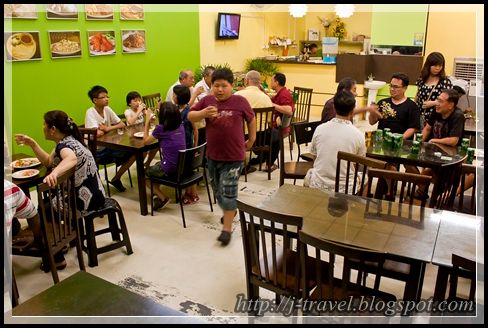
Ex Tele-ATEC Gathering at Thamara Cafe - Taman Bukit Indah, Johor Bahru.

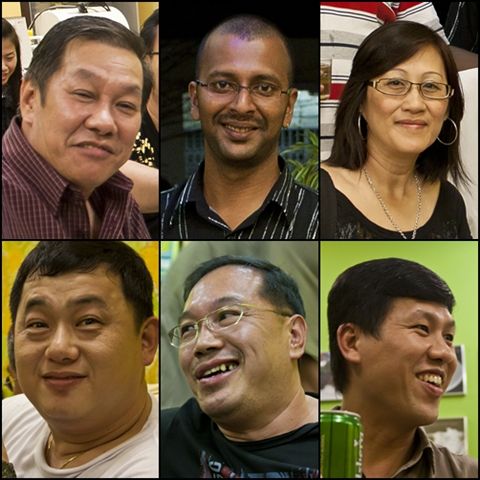
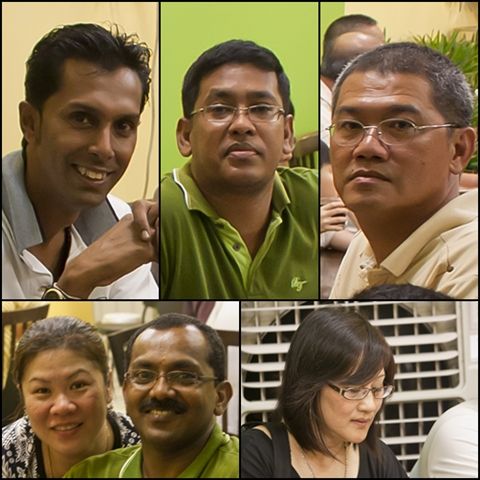
The Ex. colleagues of Tele Dynamics ATEC Buffet Gathering was held at Thamara Cafe (N1 28.781 E103 39.839) on one of the Sunday night. Everyone paid a small amount of money to enjoy all the foods and drinks for the night.

I was there earlier because of the foods photos...
Some foods were ready on the table about 6.30pm, and the Chicken Chop & Lamb Chop really made my mouth watery...! :)

The foods of the night

They did prepared some vegetables & fried rice for those who are not fancy about the Western food.

The Seafood Fried Rice

The Pasta

Dolly Fish - for the kids, I think...

Chicken Chop

Lamb Chop

The Fresh Salmon Fish

You can chose your own preference like Black Pepper or Mushroom sauce. I took some of everything on the table, and I really enjoyed the foods Very much! Well, you are right! You can have it as much as you can for that night! I had all of it twice! :)

Beside the foods, soft drink and Beer was provided by Thamara Cafe. Again! Drink as much as you can!
What can I say?! Delicious foods accompany with beer & bunch of good friends!

It was a Delightful night with a satisfied environment!


All of them appreciated with the arrangement by Thamara Cafe who provided such a Wonderful night for the Ex. Tele-ATEC colleagues!


* The Cafe is welcome any group who like to have a buffet function in the Cafe. Kindly contact the Cafe for more information.

Thamara Cafe
14, Jalan Indah 16/7,
Taman Bukit Indah, Johor Bahru.
Tel : +6012-7373103 / +6016-7171343
Business hour : 11AM - 10PM (Close on Monday)

Location map of Thamara Cafe


Next Week On The Travel Photographer


For the week starting Monday November 29,  the following posts are in the blog's pipeline:

1. The work of a photographer with a ton of images of India, including one of the wrestlers of Benares. I had planned to post it last week.
2. The work of another photographer with a lot of images of Buddhism. All black & white square format with a Hassleblad. Very impressive.
3. The work of an editorial photographer with a gallery of images from the Khumbu (Northern Nepal).
4. Interesting portraits of "witches" from West Africa.
5. The updated website of one of the best travel photographers will be featured.

Plus other whimsical posts as the week goes on.

Next Week On The Travel Photographer


For the week starting Monday November 29,  the following posts are in the blog's pipeline:

1. The work of a photographer with a ton of images of India, including one of the wrestlers of Benares. I had planned to post it last week.
2. The work of another photographer with a lot of images of Buddhism. All black & white square format with a Hassleblad. Very impressive.
3. The work of an editorial photographer with a gallery of images from the Khumbu (Northern Nepal).
4. Interesting portraits of "witches" from West Africa.
5. The updated website of one of the best travel photographers will be featured.

Plus other whimsical posts as the week goes on.

NPR: Cairo And The "Disconnected"


This touches on photography/multimedia only tangentially, so unless you're into Middle Eastern-international politics, you may want to skip all the stuff below and just click on the movie.

A number of media outlets are gingerly covering Egypt's political scene due to the imminent parliamentary elections. I say gingerly because Egypt is a so-called major ally in the "war against terror" or whatever it's called these days, so it wouldn't be politic or in our national "interests" to criticize its ossified and corrupt regime. Why the United States aligns itself with despots in the Middle East and elsewhere will always be an anachronism.

NPR has featured a number of short articles and some multimedia for the occasion, and I found this one titled In Cairo Slum, Little Hope For Change to be an exemplar of what the current situation is in Egypt. I say "current" but that's not really correct. It's always been that way, and it'll continue to be that way, perhaps get even wider...a profound disconnect and an immense gap between the poor and the elite. Trust me...I know that for a fact.

An Egyptian investment banker (I'm not sure how he can be one with such an atrocious spoken English) complains that his children are disconnected from the rest of Egypt because they go to American schools, wear Western clothes and barely speak Egyptian Arabic. Well, I've got news for him....the "disconnect" has been prevalent since the Pharaohs.

Every dog has his day as the saying goes...so going back in modern history, it was the Ottomanophiles, then Anglophiles and the Francophiles who were the elite class, and disconnected from the people. Identical to the Tsarist elite in Russian who would only speak in French, the Egyptian elite would live in bubbles of their own making, separated from the "non-elite" and the rest of their compatriots. To a lesser extent, the time for the socialist Nasserites and Sadatites came and went. Now, it's the turn of the Mubarakphiles...the business cronies, the oligarchs, and the corrupt corporate/political alliances who form the recent elite....but these will also vanish when their time comes, only to be replaced by a hungrier demographic. We've been there before, and it's only a matter of time before the cycle repeats itself. A class will just replace another class. And by the way, claiming to have Turkish ancestry (some extremely tenuous and others grossly made up) is currently a de rigueur affectation for many of the newly minted Egyptian wealthy class. Go figure. Having Turkish heritage was once viewed as being regressive, not authentic and even unpatriotic. I know that for a fact as well.

But back to the "disconnected"...which many of the privileged (some would describe them as spoiled) Egyptian youth are. Confused by a brainless embrace of a culture that is not theirs; an embrace made possible because their parents are the current moneyed elite and can buy into an ersatz Americanism; confused by their own dichotomy...seeing no conflict between binge drinking, heavy partying and then fasting Ramadan and claiming religiosity...but unable and unwilling to adopt American meritocratic values, its democratic values and work ethics.

Watch the multimedia piece...then shed a tear for the real people of Egypt who deserve infinitely better than the dismal life they're leading.

NPR: Cairo And The "Disconnected"


This touches on photography/multimedia only tangentially, so unless you're into Middle Eastern-international politics, you may want to skip all the stuff below and just click on the movie.

A number of media outlets are gingerly covering Egypt's political scene due to the imminent parliamentary elections. I say gingerly because Egypt is a so-called major ally in the "war against terror" or whatever it's called these days, so it wouldn't be politic or in our national "interests" to criticize its ossified and corrupt regime. Why the United States aligns itself with despots in the Middle East and elsewhere will always be an anachronism.

NPR has featured a number of short articles and some multimedia for the occasion, and I found this one titled In Cairo Slum, Little Hope For Change to be an exemplar of what the current situation is in Egypt. I say "current" but that's not really correct. It's always been that way, and it'll continue to be that way, perhaps get even wider...a profound disconnect and an immense gap between the poor and the elite. Trust me...I know that for a fact.

An Egyptian investment banker (I'm not sure how he can be one with such an atrocious spoken English) complains that his children are disconnected from the rest of Egypt because they go to American schools, wear Western clothes and barely speak Egyptian Arabic. Well, I've got news for him....the "disconnect" has been prevalent since the Pharaohs.

Every dog has his day as the saying goes...so going back in modern history, it was the Ottomanophiles, then Anglophiles and the Francophiles who were the elite class, and disconnected from the people. Identical to the Tsarist elite in Russian who would only speak in French, the Egyptian elite would live in bubbles of their own making, separated from the "non-elite" and the rest of their compatriots. To a lesser extent, the time for the socialist Nasserites and Sadatites came and went. Now, it's the turn of the Mubarakphiles...the business cronies, the oligarchs, and the corrupt corporate/political alliances who form the recent elite....but these will also vanish when their time comes, only to be replaced by a hungrier demographic. We've been there before, and it's only a matter of time before the cycle repeats itself. A class will just replace another class. And by the way, claiming to have Turkish ancestry (some extremely tenuous and others grossly made up) is currently a de rigueur affectation for many of the newly minted Egyptian wealthy class. Go figure. Having Turkish heritage was once viewed as being regressive, not authentic and even unpatriotic. I know that for a fact as well.

But back to the "disconnected"...which many of the privileged (some would describe them as spoiled) Egyptian youth are. Confused by a brainless embrace of a culture that is not theirs; an embrace made possible because their parents are the current moneyed elite and can buy into an ersatz Americanism; confused by their own dichotomy...seeing no conflict between binge drinking, heavy partying and then fasting Ramadan and claiming religiosity...but unable and unwilling to adopt American meritocratic values, its democratic values and work ethics.

Watch the multimedia piece...then shed a tear for the real people of Egypt who deserve infinitely better than the dismal life they're leading.

Saturday, November 27, 2010

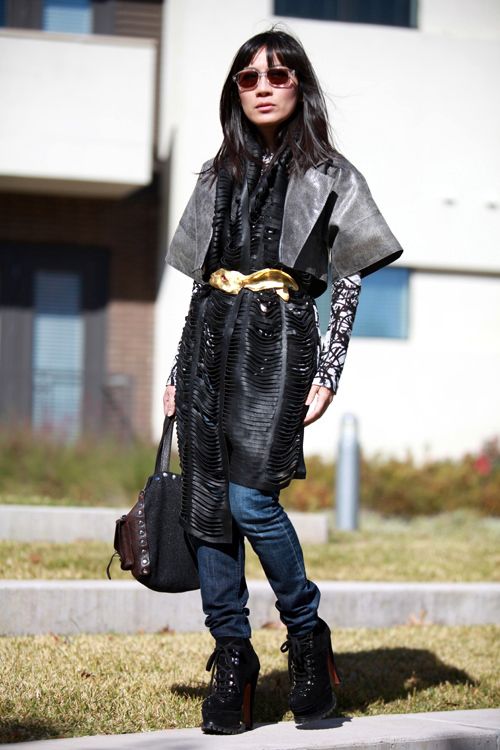
Gareth Pugh Leather Scarf

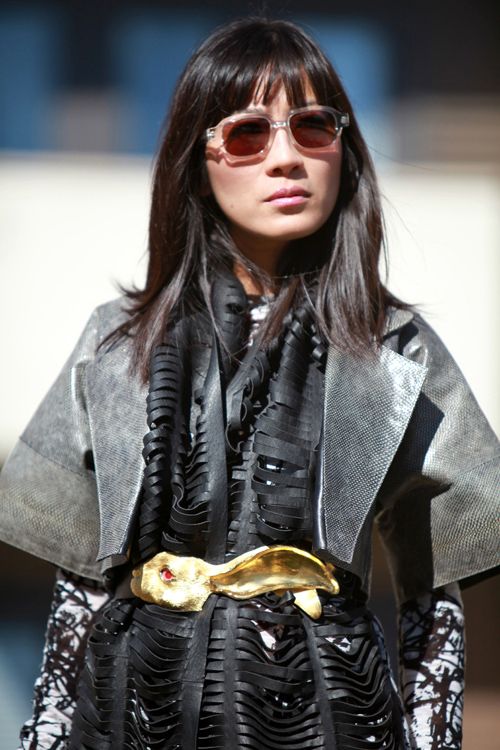
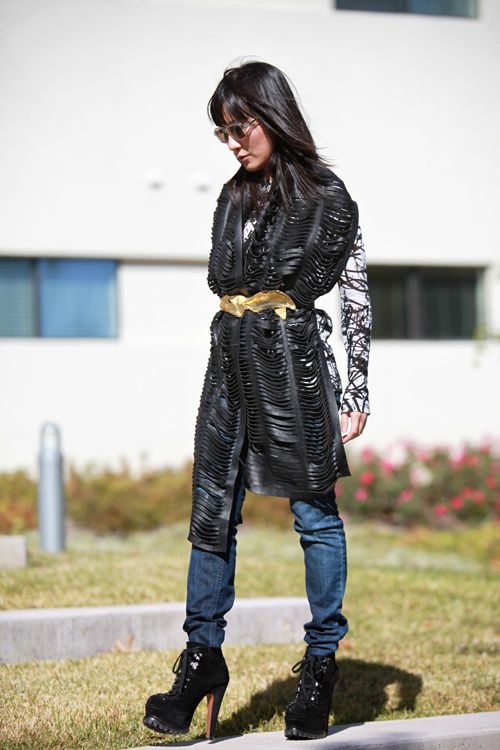
This outfit was my favorite outfit of the month; November. I actually wore it so many times in the last four weeks. Two weeks ago, I finally managed to take pictures of it, but I didn't have a chance to share it before we went on our trip to California. I will see you in Dallas tomorrow. Here is the outfit:
Balenciaga jacket was over 2 years ago, from consignment store INA in NYC.
This is my coolest scarf in my closet; Gareth Pugh leather scarf which I purchased sometime long ago. I've gotten tons of compliments whenever I wear it. I styled it with Proenza top, Madewell jeans, Alaia heeled-hiking boots.
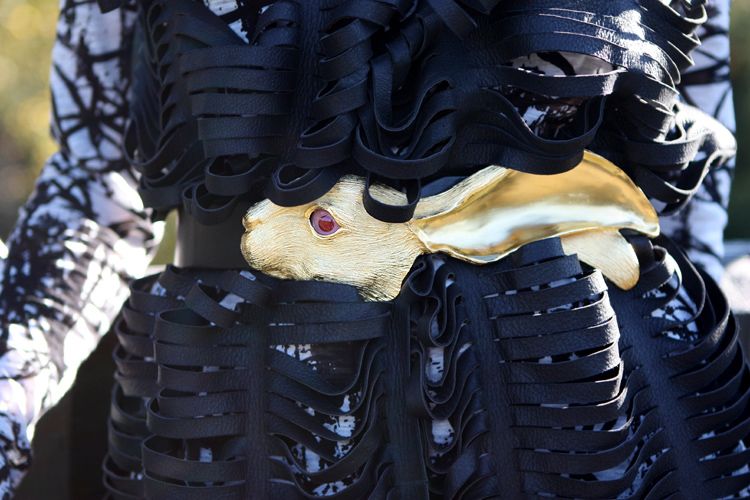
Christopher Ross rabbit buckle belt.
IDEA TIP for DIY this scarf: you could find a nice piece of leather, faux leather, or suede, or fabric which is medium weight and still gives a good permanent raw edge. It is about 3 yards 12 inches long and about 13 inches wide (or whatever size you like). Then, use a chalk to draw and cut out the pattern as it shows in the pictures above. The last thing you need is your time and be patient...At least, you don't have to sew ;)

Thank you everyone for visiting and comments!! Have a lovely weekend!! Hugs...Hanh :)

Kares Le Roy: Tibet & More


Here's the photographic work of Kares Le Roy, a French photographer and graphic designer. Unfortunately, his bio is very limited on his web site, but he traveled and photographed in Tibet, Nepal, India, Bali, Cuba, Cambodia and Morocco...returning with quite an inventory of photographs which he categorizes as Portraits, Life, Street and Landscape.

Kares Le Roy: Tibet & More


Here's the photographic work of Kares Le Roy, a French photographer and graphic designer. Unfortunately, his bio is very limited on his web site, but he traveled and photographed in Tibet, Nepal, India, Bali, Cuba, Cambodia and Morocco...returning with quite an inventory of photographs which he categorizes as Portraits, Life, Street and Landscape.

Friday, November 26, 2010

Black Friday: Get My Book!!!


On this Black Friday, my new photo book Bali: Island of Gods is still available from Blurb.

You can choose between two main versions of the book (82 pages of black & white photographs): one is a large (13x11 inches) landscape hardcover version and the other is a standard (10x8 inches) landscape version.

More details are available on a page of my website Island of Gods. The link will also take you to my bookstore on Blurb, which has previews of the book.

Forget the long lines at the check-outs...just do it online. :o)

Black Friday: Get My Book!!!


On this Black Friday, my new photo book Bali: Island of Gods is still available from Blurb.

You can choose between two main versions of the book (82 pages of black & white photographs): one is a large (13x11 inches) landscape hardcover version and the other is a standard (10x8 inches) landscape version.

More details are available on a page of my website Island of Gods. The link will also take you to my bookstore on Blurb, which has previews of the book.

Forget the long lines at the check-outs...just do it online. :o)

Thursday, November 25, 2010

Thanksgiving Wishes


All the best from The Travel Photographer on this Thanksgiving Day!

There may not be a post tomorrow...I'll be flying back to New York, probably feeling very full.

Thanksgiving Wishes


All the best from The Travel Photographer on this Thanksgiving Day!

There may not be a post tomorrow...I'll be flying back to New York, probably feeling very full.

Apratim Saha: Varanasi

Apratim Saha is both a pharmaceutical executive and a photographer, whose work has been featured in the National Geographic and other publications. He's also a contributor to NationalGeographicStock.com

While I've liked Apratim's Varanasi gallery in which the above photograph of the sadhu is fetured, there's a photograph of a holy man, possibly after a dip in the Ganges, carefully arranging what can only be described as a comb-over. A priceless image of the temporal perhaps trumping the sacred. You'll find it in the Culture portfolio.

Apratim Saha: Varanasi

Apratim Saha is both a pharmaceutical executive and a photographer, whose work has been featured in the National Geographic and other publications. He's also a contributor to NationalGeographicStock.com

While I've liked Apratim's Varanasi gallery in which the above photograph of the sadhu is fetured, there's a photograph of a holy man, possibly after a dip in the Ganges, carefully arranging what can only be described as a comb-over. A priceless image of the temporal perhaps trumping the sacred. You'll find it in the Culture portfolio.

Wednesday, November 24, 2010

Artistic Mind

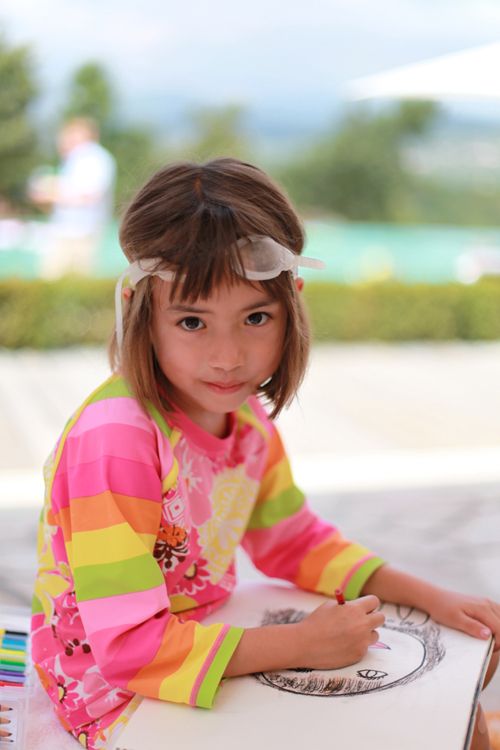
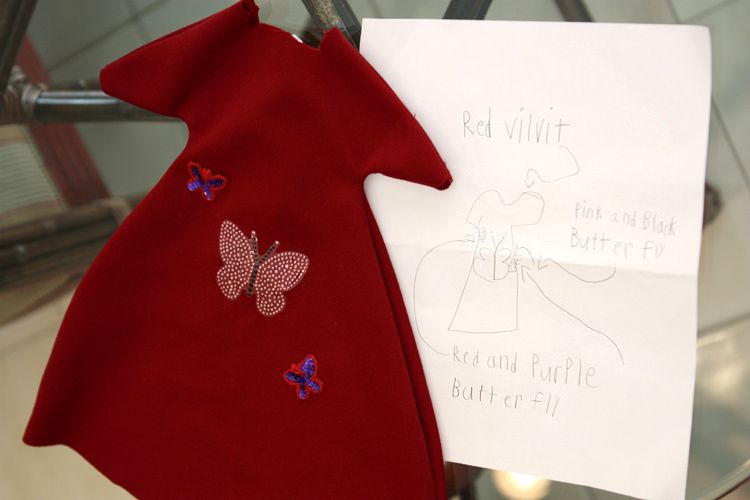
My little girl loves art; drawing, painting, designing clothing for her doll or for herself. She can do things like that all day without complaining.
This is her sketch for her dress when she was 4 years old. Her first time to design clothes. She actually picked out her own color and fabric. Grandma was the one to sew the dress for her.
She was in her dress for her 6 year old birthday.
She takes advantage of wherever she can draw or paint, whether at a swimming pool or at the airport while we're waiting for our flight, or in the air plane...
This is her self portrait when she was 6 years old.
She just turned 7 last month and this is her recent design for her doll's clothes. She wanted exactly the color and the sketch as shown on the right.
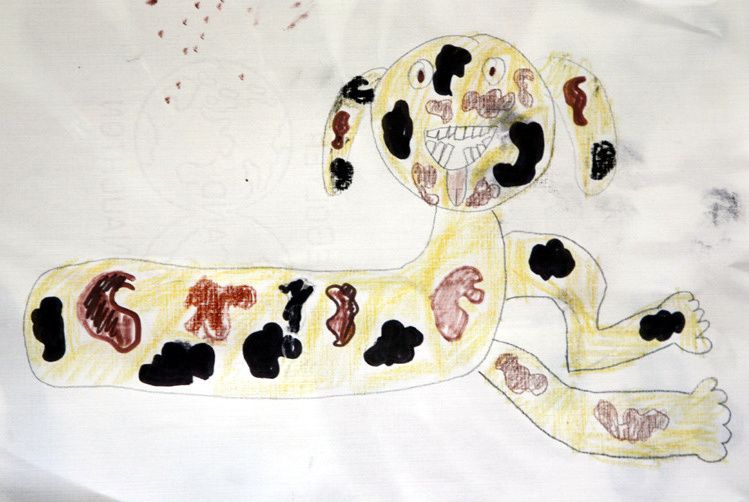
This is her dog that she wished for when she was 4 years old.
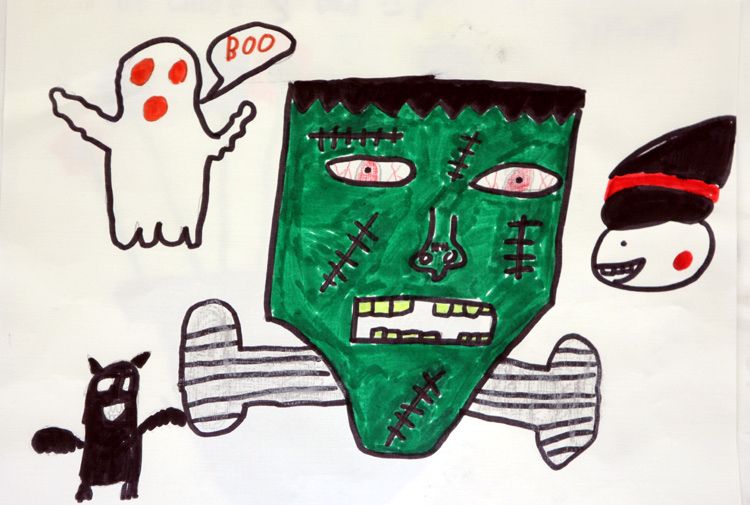
This is her drawing for Halloween this year.
This is my favorite one. She recently drew it for Thanksgiving.

My big girl doesn't like art that much. But whenever she does arts or crafts, she includes details and does a great job. This is her Turkey. She has a scientific mind.
Thank you everyone for visiting!!! Have a wonderful day!!! and...
HAPPY THANKSGIVING!!!!

Michelle Frankfurter: Destino

Photo © Michelle Frankfurter- All Rights Reserved
Having read Cormac McCarthy’s, The Crossing, Michelle Frankfurter started to photograph along the US-Mexico border, and focuses her photo essay Destino featured on Burn magazine on undocumented Central American migrants who travel across Mexico in an attempt to reach the United States to work.

It's a sad tale that highlights not only the harsh risks inherent in such an endeavor, be it from criminal gangs, from corrupt police, from accidents to a myriad of other life-endangering events on the way.

A number of photographers attending the Mexico Foundry Photojournalism Workshop chose a similar subject for their documentary projects, and the area known as La Lecheria, where migrants seemed to converge to hitchhike north-bound trains, was a magnet for those photographers.

Michelle Frankfurter
is a documentary photographer who worked for three years as a staff photographer for daily newspapers: The Herald – Journal and Post Standard in Syracuse, New York. She spent three years living in Nicaragua where she worked as a stringer for the British news agency, Reuters and with the human rights organization Witness For Peace. In 1995, a long-term project on Haiti earned her two World Press Photo awards. She has worked for a number of editorial publications, including The Guardian of London, The Washington Post Magazine, Ms., Time, and Life Magazine.